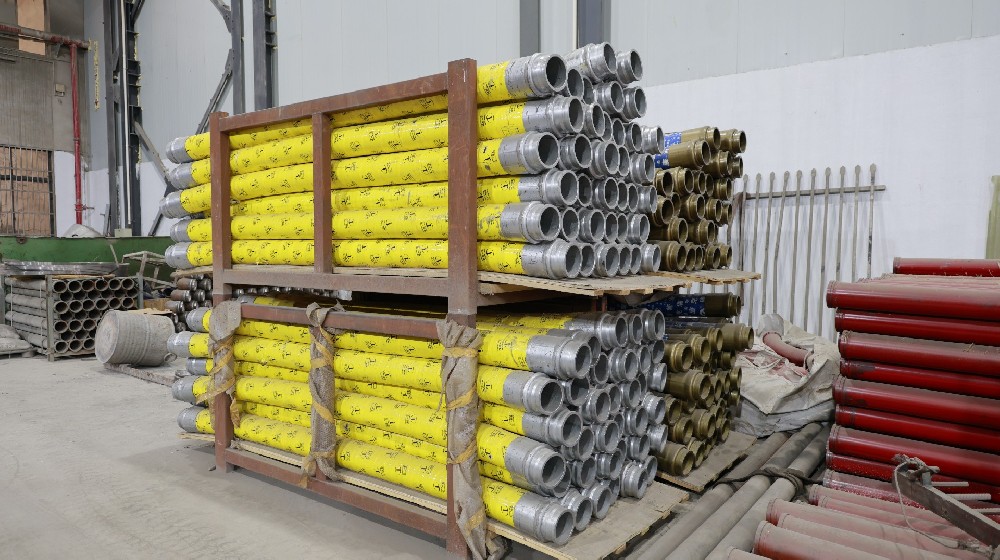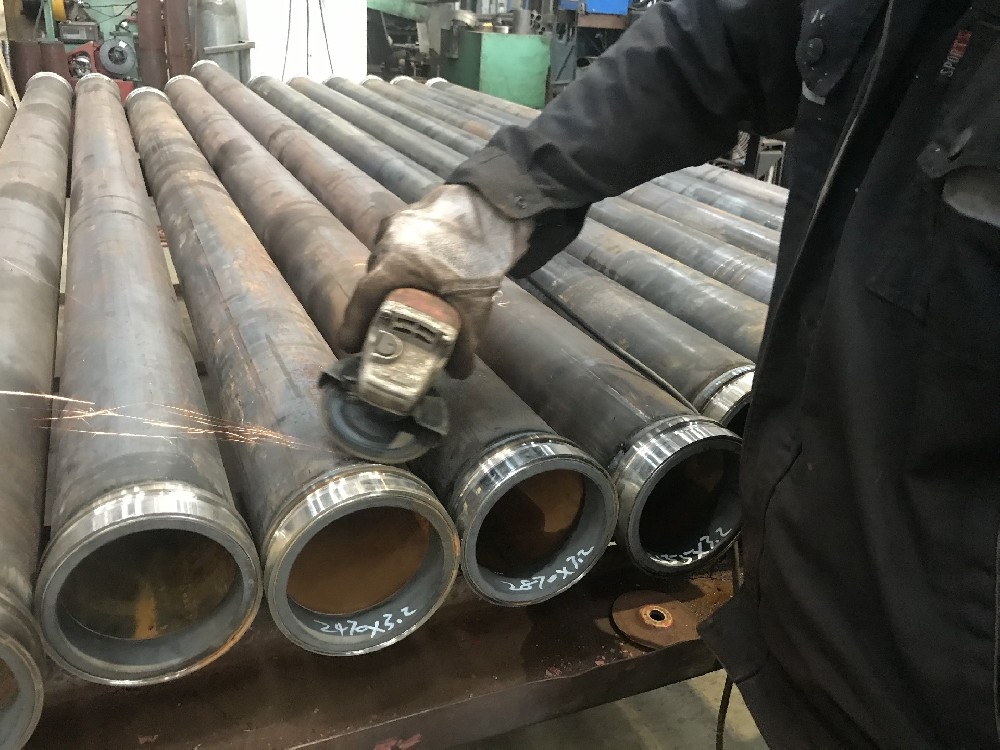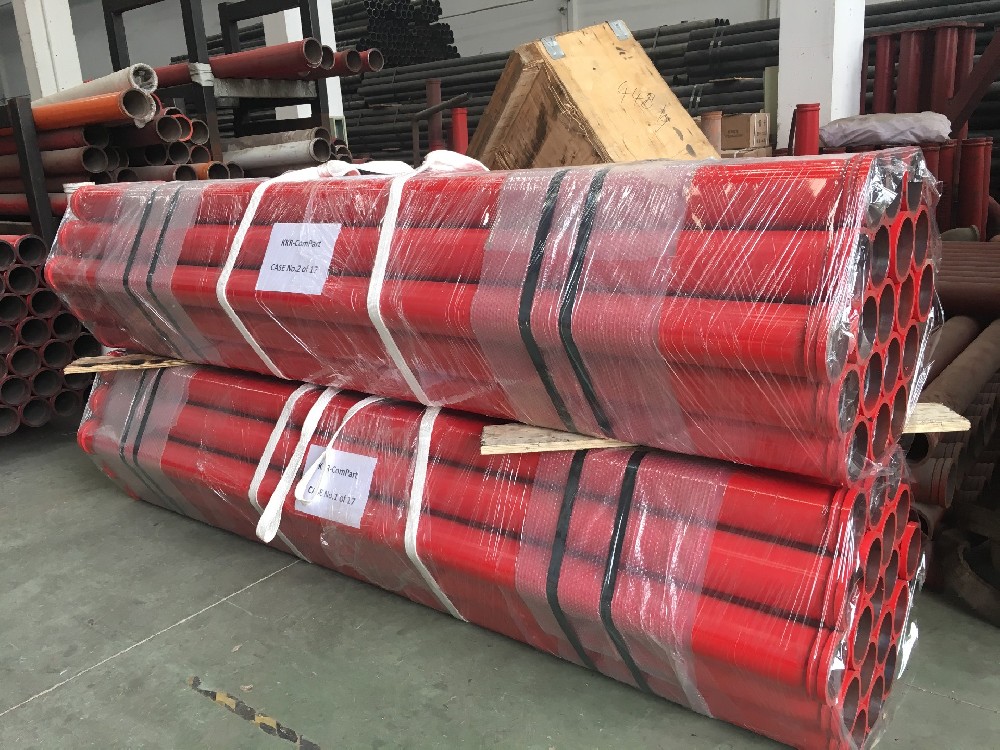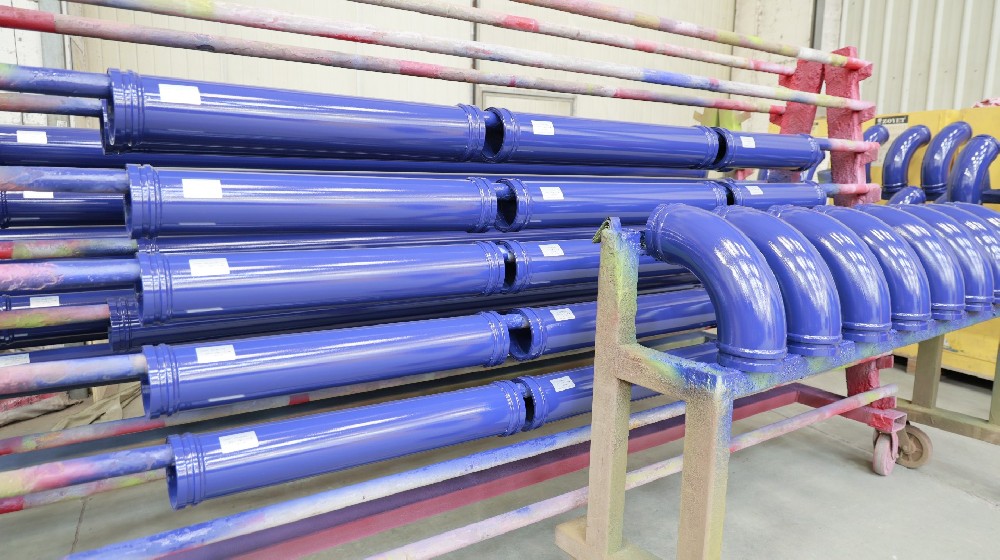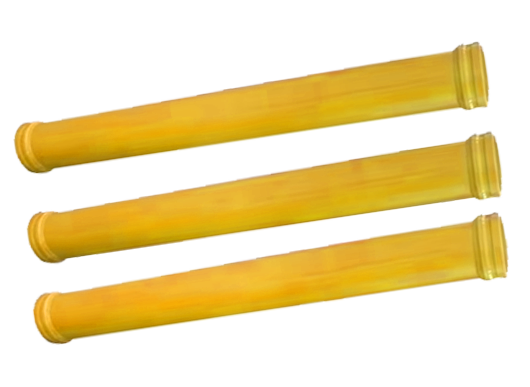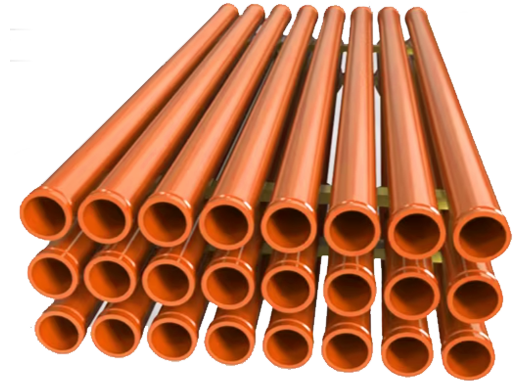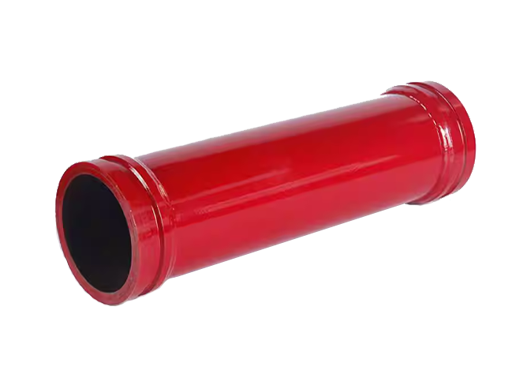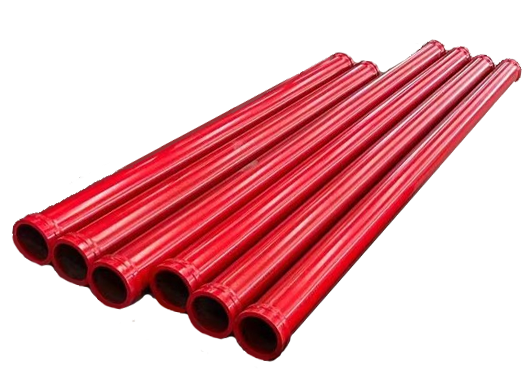



Reducing Pipes for Complex Pumping Systems
Reducing Pipes for Complex Pumping Systems: A Practical Guide to Size Transitions, Performance and Selection
In concrete pumping applications, piping configuration has a direct impact on material flow, pressure management, equipment compatibility, and overall jobsite efficiency. When a pumping system needs to connect components with different nominal diameters, reducing pipes provide a practical solution for creating a controlled transition between pipe sizes.
Reducing pipes are commonly used in concrete pump pipelines, especially where the outlet diameter of a concrete pump, boom section, delivery pipeline, elbow, or end hose differs from the diameter of another pipeline component. Selecting the appropriate reducer is therefore not simply a matter of matching two dimensions. The reducer needs to be considered as part of the complete pumping system.
This guide explains the role of reducing pipes in complex concrete pumping systems, key design considerations, common configurations, and practical factors that procurement teams and pumping contractors should evaluate when selecting components.
What Is a Reducing Pipe?
A reducing pipe is a pipeline component designed to connect two sections of pipe with different nominal diameters. In concrete pumping systems, it creates a gradual or controlled transition between a larger-diameter pipe and a smaller-diameter pipe.
Depending on the application, reducing pipes may also be described as:
Concrete pump reducer
Concrete pump reducing pipe
Pump line reducer
Concrete delivery pipe reducer
Pump truck reducer
Reducer for concrete pumping
Concrete pump pipeline reducer
Reducing adapter
The specific terminology may vary between manufacturers, markets, and equipment configurations. For procurement purposes, dimensional compatibility and connection standards are more important than the name used to describe the component.
Why Reducing Pipes Matter in Concrete Pumping Systems
A concrete pumping pipeline is not simply a collection of straight pipes. It normally consists of multiple components, including straight pipes, elbows, reducers, clamps, couplings, adapters, and end components.
When these components have different diameters, a suitable reducing pipe is needed to establish the transition.
A properly selected reducer can help achieve several practical objectives:
1. Connecting Different Pipe Diameters
Different parts of a pumping system may use different pipe sizes because of equipment design, pipeline configuration, or application requirements.
For example, a pump outlet may connect to a larger pipeline, while a downstream section requires a smaller diameter. A reducer allows these components to be connected within a compatible pipeline configuration.
2. Supporting Pipeline Configuration
Complex pumping projects may involve changes in direction, elevation, distance, and pipe diameter. Reducers provide additional flexibility when engineers or contractors need to integrate different pipeline components.
3. Managing the Transition Between Pipe Sections
A sudden change in internal diameter can influence concrete flow characteristics. The geometry of the reducer therefore matters.
The transition should be selected according to the pumping system, concrete characteristics, pipeline arrangement, and operating conditions rather than based only on nominal dimensions.
4. Facilitating Equipment Compatibility
Concrete pumps from different equipment configurations may use different outlet or pipeline dimensions. A correctly specified reducer can help connect compatible components without unnecessarily modifying the main pipeline.
Common Types of Reducing Pipes
Reducing pipes can be categorized in several ways depending on their geometry, connection method, material construction, and application.
Concentric Reducers
A concentric reducer has a common centerline between the larger and smaller pipe sections.
This configuration is useful when maintaining a central flow path is important and when the pipeline arrangement allows the reducer to be installed symmetrically.
Eccentric Reducers
An eccentric reducer has offset centerlines between the two pipe diameters.
The configuration may be selected for particular installation requirements where maintaining a specific pipe elevation or orientation is necessary.
The choice between concentric and eccentric designs should be based on the actual pipeline layout and engineering requirements.
Welded Reducing Pipes
Some reducers are manufactured as welded components. The manufacturing process can be selected according to the required dimensions, wall structure, material, and production requirements.
For concrete pumping applications, the internal surface and structural integrity of the component are important considerations because concrete contains abrasive aggregate.
Wear-Resistant Reducing Pipes
Concrete is an abrasive material. Repeated pumping can cause internal wear, particularly in areas exposed to high flow velocity or changes in flow direction.
For this reason, reducing pipes may be manufactured using wear-resistant materials or reinforced structures designed for concrete pumping applications.
The appropriate material should be selected according to the concrete mix, pumping conditions, expected service cycle, and maintenance requirements.
Key Factors When Selecting a Concrete Pump Reducer
Choosing a reducer for a concrete pumping system requires more than checking the inlet and outlet diameters.
Procurement teams should evaluate several technical parameters.
1. Inlet and Outlet Diameter
The first step is confirming the nominal diameters at both ends of the reducer.
For example, a project may require a transition from a larger pipeline to a smaller pipeline. The reducer must match the corresponding pipe and coupling dimensions.
Incorrect dimensional matching can result in installation difficulties, leakage, or an incompatible connection.
2. Connection Type
The connection method should be compatible with the existing pipeline.
Common connection considerations include:
Flange dimensions
Clamp dimensions
Coupling compatibility
Pipe wall dimensions
Connection length
End configuration
Before ordering, buyers should provide drawings or detailed dimensional specifications when possible.
3. Material Selection
The material used for a concrete pump reducer influences its structural properties and wear behavior.
Common considerations include:
Steel grade
Hardness
Tensile properties
Wear resistance
Heat treatment
Welding characteristics
Manufacturing process
For professional procurement, material documentation and production specifications can be useful for quality control and supplier evaluation.
4. Wall Thickness
Wall thickness should correspond to the intended application and design requirements.
A reducer operating in a concrete pumping pipeline is exposed to mechanical loads, internal pressure, vibration, and abrasive wear. Therefore, wall thickness should not be evaluated independently from the material and pipeline design.
5. Internal Surface Condition
The internal surface is directly exposed to concrete.
A consistent internal surface can support stable material flow and reduce unnecessary resistance caused by manufacturing defects, deformation, or irregular transitions.
For this reason, inspection of the internal bore is an important part of reducer quality control.
6. Reducer Geometry
The transition geometry affects how the material moves from one diameter to another.
A suitable geometry can help create a controlled transition instead of an abrupt change. However, the appropriate design depends on the concrete mix, pumping distance, pressure conditions, pipe diameter, and overall pipeline configuration.
7. Operating Conditions
The reducer should be evaluated against the actual working environment.
Important variables include:
Pumping pressure
Concrete slump
Aggregate size
Pumping distance
Vertical pumping height
Pipeline diameter
Number of elbows
Pumping frequency
Ambient conditions
A component suitable for one pumping configuration may not necessarily be suitable for another.
Reducing Pipes and Concrete Abrasion
One of the major challenges in concrete pumping is abrasion.
Concrete contains cement paste, sand, and coarse aggregate. As the mixture moves through the pipeline, solid particles continuously contact the internal pipe surface.
The wear rate can vary according to:
Aggregate type
Aggregate hardness
Particle size
Concrete formulation
Pumping velocity
Pumping pressure
Pipeline geometry
Component material
Reducers deserve particular attention because changes in diameter can alter local flow conditions.
For contractors operating equipment regularly, monitoring the condition of reducers and other high-wear components can become an important part of preventive maintenance.
How Reducers Fit Into a Complex Pumping System
A typical concrete pumping pipeline may contain several different components.
A simplified configuration can look like:
Concrete Pump → Main Pipe → Reducer → Straight Pipe → Elbow → Straight Pipe → End Hose
A more complex system may include multiple diameter transitions:
Pump Outlet → Large-Diameter Pipe → Reducer → Smaller-Diameter Pipe → Elbow → Vertical Pipeline → Horizontal Pipeline → End Section
In such configurations, each component needs to work as part of the complete system.
Rather than selecting individual parts independently, contractors should evaluate the pipeline as an integrated assembly.
Reducing Pipes for Pump Truck Applications
Concrete pump trucks often operate under changing jobsite conditions. Pipeline sections may be installed along the boom, connected to additional ground pipelines, or configured for different placement requirements.
A reducer may therefore be required when the pipeline transitions between different component sizes.
For pump truck applications, procurement teams should pay attention to:
Pump model compatibility
Pipeline diameter
Reducer dimensions
Coupling system
Component length
Material specification
Internal bore
Wear characteristics
Inspection requirements
Providing the pump model and existing pipe dimensions to the supplier can significantly reduce the risk of ordering an incompatible component.
Reducing Pipes for Stationary Concrete Pumps
Stationary concrete pumps may use longer delivery pipelines than many mobile configurations.
Long-distance pumping can introduce additional considerations related to pressure loss, pipeline layout, material consistency, and wear.
When reducers are incorporated into stationary pumping systems, engineers should evaluate their location within the pipeline rather than treating them as interchangeable accessories.
The number of diameter transitions should also be considered during pipeline planning.
Installation Considerations
Correct installation is essential for maintaining pipeline integrity.
Before installing a reducer, operators should check:
Pipe and reducer dimensions
Connection compatibility
Clamp or coupling condition
Internal bore condition
Sealing components
Surface cleanliness
Pipeline alignment
Component positioning
The reducer should be properly aligned with the adjacent pipe sections. Connections should be installed according to the applicable equipment and component specifications.
Any damaged clamp, coupling, gasket, or connection component should be inspected before use.
Maintenance and Inspection
Reducing pipes should be included in routine pipeline inspection programs.
Depending on operating frequency, inspection may include:
Visual inspection
Internal bore inspection
Wall-thickness measurement
Connection inspection
Wear monitoring
Crack inspection
Deformation inspection
For high-frequency pumping operations, tracking component service history can help maintenance teams identify recurring wear patterns.
A simple inspection record can include:
| Item | Information |
|---|---|
| Component | Reducing Pipe |
| Inlet Diameter | According to specification |
| Outlet Diameter | According to specification |
| Material | Supplier specification |
| Installation Date | Maintenance record |
| Pumping Application | Project information |
| Inspection Date | Maintenance record |
| Wear Condition | Inspection result |
| Replacement Status | Maintenance decision |
This approach allows contractors to move from reactive replacement toward more structured component management.
How to Choose a Reducing Pipe Supplier
For B2B buyers, supplier evaluation should include more than price.
A professional supplier assessment may consider:
Manufacturing Capability
Can the supplier manufacture reducers according to specific dimensions and drawings?
Quality Control
Does the manufacturer have documented inspection procedures for dimensions, materials, welding, heat treatment, and finished components?
Product Consistency
Can the supplier maintain stable dimensional and manufacturing quality across repeated orders?
Technical Support
Can the supplier help confirm dimensions, connection types, and application requirements?
Customization Capability
For non-standard pumping systems, the ability to manufacture components according to technical drawings can be valuable.
After-Sales Support
For contractors and distributors, reliable communication regarding product specifications, replacement parts, and technical questions can improve procurement efficiency.
Reducing Pipe vs. Standard Straight Pipe
Straight pipes and reducing pipes serve different purposes.
A straight pipe maintains the same nominal diameter along its length. A reducing pipe changes the diameter between its two ends.
Therefore:
Straight Pipe: Used to extend a pipeline while maintaining the same diameter.
Reducing Pipe: Used to create a transition between different pipe diameters.
In a complex pumping system, both components may be required.
The correct combination depends on the equipment configuration and project requirements.
Procurement Checklist for Concrete Pump Reducers
Before sending an inquiry to a manufacturer, buyers can prepare the following information:
Required inlet diameter
Required outlet diameter
Overall length
Connection type
Wall thickness
Material requirement
Pump model
Pipeline application
Concrete characteristics
Working pressure
Required quantity
Drawing or technical specification
Delivery requirements
Providing complete technical information allows the manufacturer to evaluate the application more efficiently and reduce unnecessary specification changes during the quotation process.
Frequently Asked Questions
What is a reducing pipe used for?
A reducing pipe connects two pipeline sections with different nominal diameters. In concrete pumping systems, it is commonly used to transition between different pipe sizes.
Can a reducing pipe be customized?
Depending on the manufacturer's production capabilities, reducers can often be produced according to specific dimensions, connection requirements, and technical drawings.
Why is wear resistance important for concrete pump reducers?
Concrete contains abrasive particles such as sand and aggregate. Continuous contact with the internal pipe surface can gradually cause wear, making material selection and wear monitoring important.
How do I select the correct reducer size?
Start with the actual inlet and outlet dimensions of the connected components. Then confirm connection type, wall thickness, overall length, material requirements, and operating conditions with the supplier.
Are reducers suitable for both pump trucks and stationary pumps?
Reducers can be used in different concrete pumping configurations when their dimensions, connection method, material, and operating parameters are compatible with the specific system.
Conclusion
Reducing pipes are important components in concrete pumping systems where different pipe diameters need to be connected. Their role extends beyond simple dimensional conversion. Material selection, reducer geometry, connection compatibility, internal surface condition, wear resistance, and operating conditions all influence their suitability for a particular application.
For concrete pump contractors, equipment distributors, engineering companies, and industrial procurement teams, the most effective approach is to evaluate the reducer as part of the complete pumping pipeline.
Before placing an order, provide the manufacturer with accurate dimensions, connection requirements, application information, and technical drawings whenever available. This creates a clearer procurement process and helps ensure that the selected reducing pipe is appropriate for the intended pumping system.
If you are sourcing concrete pump reducers or customized reducing pipes, a manufacturer with dedicated production capability and technical support can help evaluate your specifications and provide a suitable configuration for your application.
SEO Metadata
SEO Title:
Reducing Pipes for Complex Concrete Pumping Systems | Selection Guide
Meta Description:
Learn how reducing pipes are used in concrete pumping systems, including reducer types, materials, dimensions, wear considerations, installation, maintenance, and supplier selection.
Primary Keyword:
reducing pipes
Secondary Keywords:
concrete pump reducer, concrete pump reducing pipe, pump line reducer, concrete delivery pipe reducer, concrete pump pipeline reducer, reducing pipe for concrete pump, concrete pump pipe reducer, wear resistant reducing pipe
Suggested URL Slug:
/reducing-pipes-concrete-pumping-systems/
Suggested H1:
Reducing Pipes for Complex Pumping Systems: A Practical Guide to Size Transitions, Performance and Selection