


Concrete Delivery Pipes for Public Venue Projects
Concrete Delivery Pipes for Public Venue Projects
Public venue construction projects often involve large reinforced-concrete structures, complex layouts, and carefully coordinated concrete placement schedules. Stadiums, convention centers, exhibition halls, theaters, arenas, transportation terminals, and other public facilities may require concrete to be pumped over considerable distances or into areas with limited access.
In these applications, concrete delivery pipes for public venue projects provide the connection between concrete pumping equipment and the final placement location. The selection of pipe diameter, wall thickness, material, connection system, and pipeline configuration can influence installation efficiency, maintenance requirements, and pumping performance.
This article explains how concrete delivery pipes are used in public venue construction and what contractors, concrete pump operators, distributors, and procurement teams should consider when selecting a suitable delivery pipe system.
What Are Concrete Delivery Pipes?
Concrete delivery pipes are rigid or flexible components designed to transport fresh concrete from a concrete pump to a designated placement point.
A complete concrete delivery system may include:
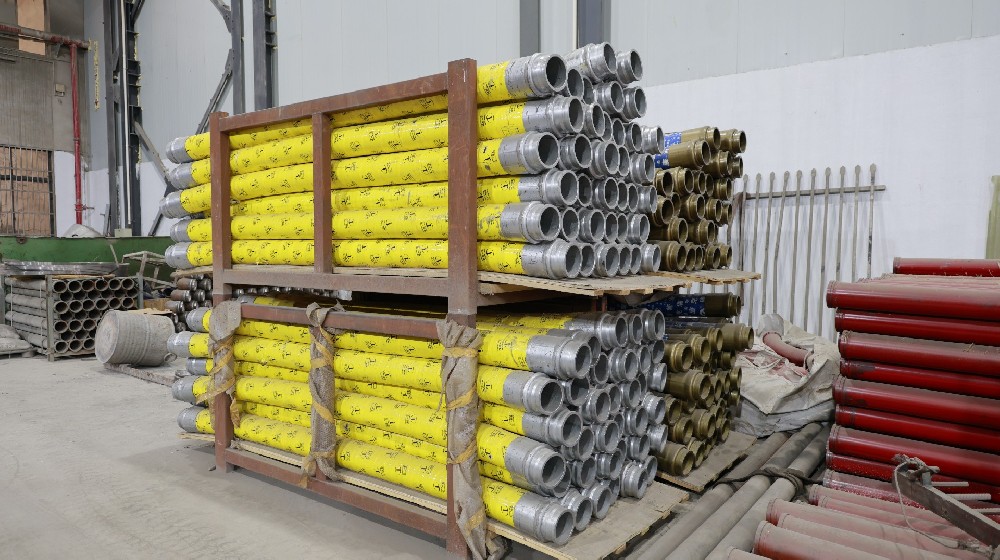
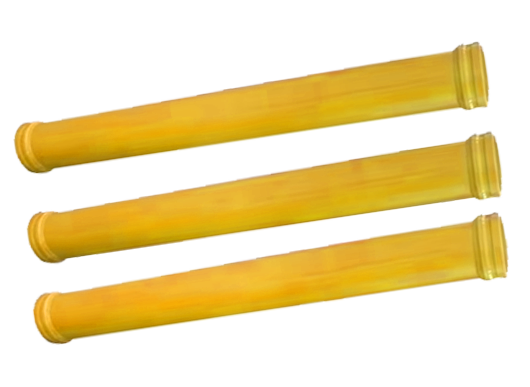
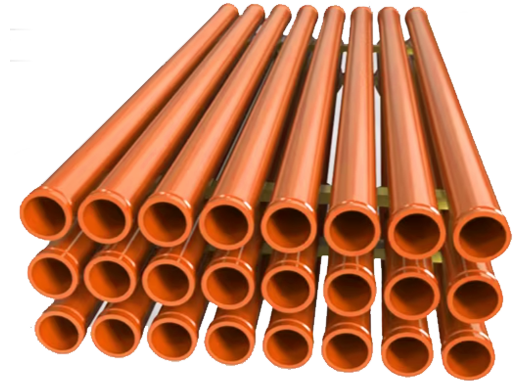
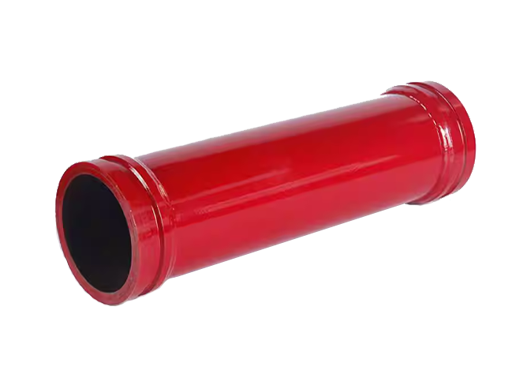
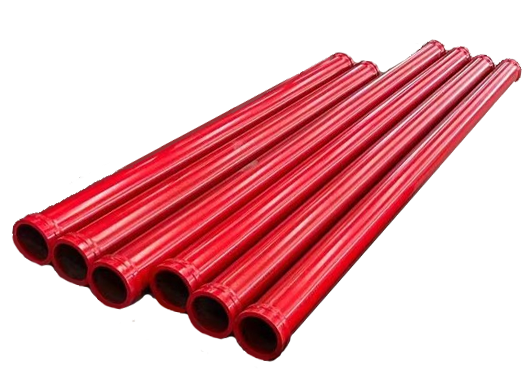
Straight concrete delivery pipes
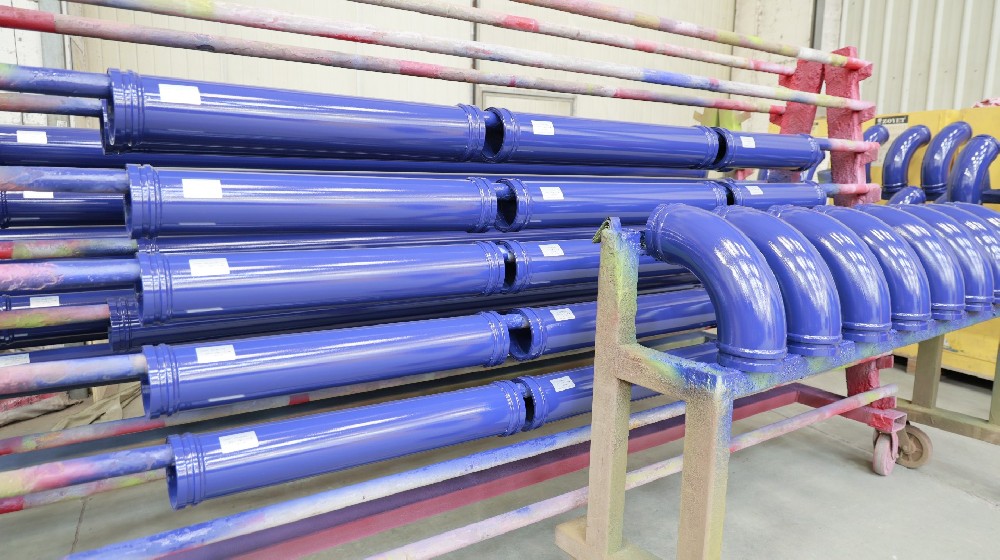
Concrete pump elbows
Reducer pipes
Couplings and clamps
Wear-resistant pipe sections
Flexible end hoses
Pipeline support components
The exact combination depends on the concrete pump, project layout, pumping distance, concrete properties, and placement requirements.
In public venue construction, delivery pipes may be installed across floors, along structural areas, through temporary access zones, or around existing construction obstacles.
Why Concrete Delivery Pipes Matter in Public Venue Construction
Public venue projects often combine large structural spans with complicated construction sequences. Concrete placement may need to cover foundations, columns, beams, slabs, seating structures, roofs, ramps, and other reinforced-concrete elements.
A suitable concrete delivery pipe system can help construction teams address several practical requirements.
Large Concrete Placement Areas
Sports stadiums and exhibition facilities can contain large floor areas and structural sections.
Instead of positioning a concrete truck directly next to every placement point, pumping equipment can transport concrete through a delivery pipeline.
The pipeline can then be extended or repositioned as the construction area changes.
Complex Building Layouts
Public buildings may include curved structures, multiple levels, underground areas, and restricted-access zones.
Elbows, reducers, straight pipes, and flexible hoses allow contractors to adapt the delivery route to the site layout.
Coordinated Construction Schedules
Concrete placement is usually coordinated with concrete batching, transportation, pumping, reinforcement, formwork, and finishing operations.
A delivery system with suitable specifications and properly maintained connections can support more predictable site operations.
Applications of Concrete Delivery Pipes in Public Venues
Concrete delivery pipes can be used throughout different stages of public venue construction.
Stadium Construction
Stadiums often contain foundations, seating structures, columns, beams, concourses, and large floor areas.
Concrete may need to be transported through changing elevations and around structural sections.
A well-planned delivery pipeline can provide access to placement areas without requiring the pump to be located directly beside every work zone.
Convention and Exhibition Centers
Convention centers typically include large structural spaces and extensive floor areas.
Concrete pumping pipes may be used for foundations, slabs, columns, retaining structures, and other reinforced-concrete components.
The pipeline layout can be adjusted according to the construction sequence and accessible work areas.
Theaters and Performing Arts Buildings
Theaters may have multi-level structures, underground spaces, inclined surfaces, and complex architectural elements.
Concrete delivery pipes can help transport concrete into areas where direct vehicle access is limited.
Indoor Arenas
Indoor sports arenas can include large foundations, seating systems, concourses, structural frames, and service areas.
The concrete delivery system may need to pass through restricted spaces while maintaining compatibility with the pumping equipment.
Transportation Facilities
Rail stations, terminals, and other transportation-related public buildings can require extensive reinforced-concrete construction.
Pumping pipes can provide concrete delivery between accessible pump positions and locations affected by restricted vehicle movement.
How to Select Concrete Delivery Pipes for Public Venue Projects
Selecting an appropriate delivery pipe requires consideration of the entire pumping system rather than a single specification.
1. Pipe Diameter
The pipe diameter affects the internal flow area and should be compatible with the concrete pump and concrete mix.
Selection may depend on:
Pump outlet diameter
Required concrete flow
Aggregate size
Pumping distance
Concrete workability
Pipeline configuration
A pipe diameter should be confirmed according to the technical requirements of the project and pumping equipment.
2. Wall Thickness
Wall thickness is an important consideration because the pipe is exposed to internal pressure and continuous contact with concrete.
Concrete contains aggregates that can gradually wear the internal pipe wall.
The appropriate wall thickness depends on:
Concrete composition
Operating pressure
Pumping frequency
Delivery distance
Expected wear
Service conditions
For projects with repeated pumping operations, contractors should include pipe wear in their maintenance planning.
3. Pipe Material
The pipe material should be selected according to the application's mechanical and wear requirements.
For concrete pumping applications, material selection may involve considerations such as:
Mechanical strength
Weldability
Wear resistance
Dimensional stability
Operating environment
A manufacturer should provide clear material and product specifications for technical evaluation.
4. Pipe Length
Standard pipe lengths are suitable for many construction sites, but project layouts may sometimes require customized or replacement sections.
Different lengths can be useful when:
Installation space is limited
Pipeline routing changes between construction stages
Existing sections need replacement
A specific distance must be covered without unnecessary joints
Accurate length planning can also help reduce unnecessary pipeline connections.
5. Connection Type
A public venue project may contain many individual pipe sections.
The connection system therefore needs to be compatible throughout the delivery line.
Important considerations include:
Coupling dimensions
Pipe-end dimensions
Sealing components
Clamp compatibility
Installation method
Replacement convenience
Before purchasing replacement pipes, contractors should confirm the connection specifications of the existing pipeline.
The Role of Elbows in Concrete Delivery Systems
Elbows allow concrete delivery pipes to change direction around structural elements and site obstacles.
For public venue construction, elbows may be used to:
Change horizontal direction
Connect different elevations
Route pipes around formwork
Navigate structural openings
Connect vertical and horizontal sections
However, elbows can experience different wear patterns compared with straight pipes.
Concrete changes direction inside the elbow, which can create localized abrasion depending on the geometry and concrete properties.
For this reason, elbows should be inspected regularly, particularly in frequently used pumping lines.
Concrete Delivery Pipe Layout Planning
Pipeline routing can have a significant effect on pumping conditions and site installation.
Before installation, contractors should identify the most practical route between the pump and the final placement area.
Minimize Unnecessary Bends
A simpler route can make installation and maintenance easier.
Where the site allows, unnecessary changes in direction should be avoided.
Consider Access
Public venue construction sites can contain cranes, formwork, reinforcement, scaffolding, temporary roads, and other equipment.
The pipeline should be positioned so that it does not unnecessarily interfere with construction activities or maintenance access.
Plan Support Points
Concrete delivery pipes must be properly supported according to their installation arrangement.
Support requirements depend on the pipe configuration, section length, operating conditions, and site structure.
Allow for Construction Changes
Large public venue projects often progress in phases.
The pipe layout may therefore need to change as different areas of the building are completed.
A modular delivery system can make repositioning and replacement more manageable.
Concrete Mix Considerations
The concrete mix can have a direct impact on pumping conditions and pipe wear.
Relevant properties include:
Slump
Aggregate grading
Maximum aggregate size
Cementitious material content
Admixtures
Workability retention
A concrete mix that is suitable for pumping should be developed according to the structural and construction requirements of the project.
The delivery pipe system should then be selected to match those pumping conditions.
Wear and Service Considerations
Concrete delivery pipes are subject to gradual internal wear during pumping.
Wear depends on several factors, including the type of concrete, pumping frequency, delivery velocity, pipeline geometry, and operating pressure.
Straight pipes may experience relatively distributed wear, while elbows may develop more localized wear.
For this reason, maintenance teams should not assume that every section of the pipeline has the same service condition.
Areas Worth Monitoring
Particular attention may be given to:
Elbows
Reducers
Pipe ends
Frequently used straight sections
Areas near changes in direction
Sections subjected to repeated installation
Regular inspection can provide information for replacement planning.
Maintenance of Concrete Delivery Pipes
Proper maintenance helps keep the concrete delivery system suitable for continued use.
Clean the Pipeline After Operation
Residual concrete can harden inside the delivery line and create blockages.
The pipeline should therefore be cleaned using procedures appropriate for the pumping equipment and project requirements.
Inspect Pipe Wall Thickness
Wall-thickness inspection can help identify sections with significant wear.
For high-use projects, maintaining inspection records can make replacement planning more systematic.
Check Couplings
Couplings and clamps should be examined for deformation, damage, excessive wear, and sealing problems.
A connection problem can lead to leakage and interrupt concrete placement.
Inspect Pipe Ends
Repeated assembly and disassembly can affect pipe ends.
Pipe ends should be checked for deformation or other conditions that may influence connection performance.
Common Problems with Concrete Delivery Pipes
Several practical problems can occur during concrete pumping.
Pipeline Blockage
Blockage may occur when concrete loses workability, pumping is interrupted, or the delivery line is not properly prepared.
A suitable concrete mix and proper operating procedures can help reduce the likelihood of blockage.
Connection Leakage
Leaks may occur because of damaged seals, worn clamps, poor installation, or dimensional mismatch.
Regular inspections can identify connection problems before pumping begins.
Excessive Wear
A pipe that has experienced significant internal wear may require replacement.
The replacement interval depends on operating conditions rather than a single universal service period.
Pipeline Vibration
Concrete pumping generates dynamic forces within the delivery line.
Proper support and appropriate pipeline routing are important for controlling unnecessary movement during operation.
How to Improve Concrete Pumping Efficiency
Efficient concrete delivery requires coordination between the pump, pipeline, concrete mix, and placement operation.
Select a Suitable Pipe Diameter
The diameter should correspond with the pumping equipment and concrete characteristics.
Keep the Pipeline Layout Practical
Avoid unnecessary bends and excessive changes in direction where site conditions permit.
Maintain the Pipeline Regularly
Routine inspection and cleaning can help identify problems before they interrupt concrete placement.
Match Wear Resistance to Actual Usage
Projects with frequent pumping may need delivery pipes with different wear characteristics from temporary or low-frequency applications.
Keep Replacement Sections Available
For large construction projects, maintaining suitable spare pipe sections can simplify maintenance when replacement becomes necessary.
Customization Options for Concrete Delivery Pipes
Different public venue projects may require different dimensions and configurations.
Depending on the manufacturer, customization may include:
Pipe length
Wall thickness
Pipe diameter
Connection configuration
Elbow specifications
Surface treatment
Material selection
Customization can be especially useful when a project needs to integrate new pipe sections with an existing concrete pumping system.
Before production, buyers should provide drawings, dimensions, photographs, or samples where available.
Buying Concrete Delivery Pipes for Public Venue Projects
Procurement teams should prepare a clear technical specification before contacting suppliers.
A specification may include:
Application: Public venue construction
Concrete pump: Pump type and outlet dimensions
Pipe diameter: According to project requirements
Wall thickness: Based on pressure and expected wear
Pipe length: Standard or customized
Material: According to operating conditions
Connection type: Compatible with existing equipment
Elbows: Required radius, angle, and connection dimensions
Quantity: Based on pipeline length and spare requirements
Providing complete information can make technical confirmation and quotation more efficient.
How to Evaluate a Concrete Delivery Pipe Supplier
For B2B buyers, supplier evaluation should include both product and manufacturing capability.
Product Range
A supplier should be able to provide the pipe types needed for the intended delivery system.
Manufacturing Control
Consistent dimensions are important when multiple pipe sections are assembled into one pipeline.
Technical Support
The supplier should be able to discuss product dimensions, connection compatibility, material specifications, and application conditions.
Quality Inspection
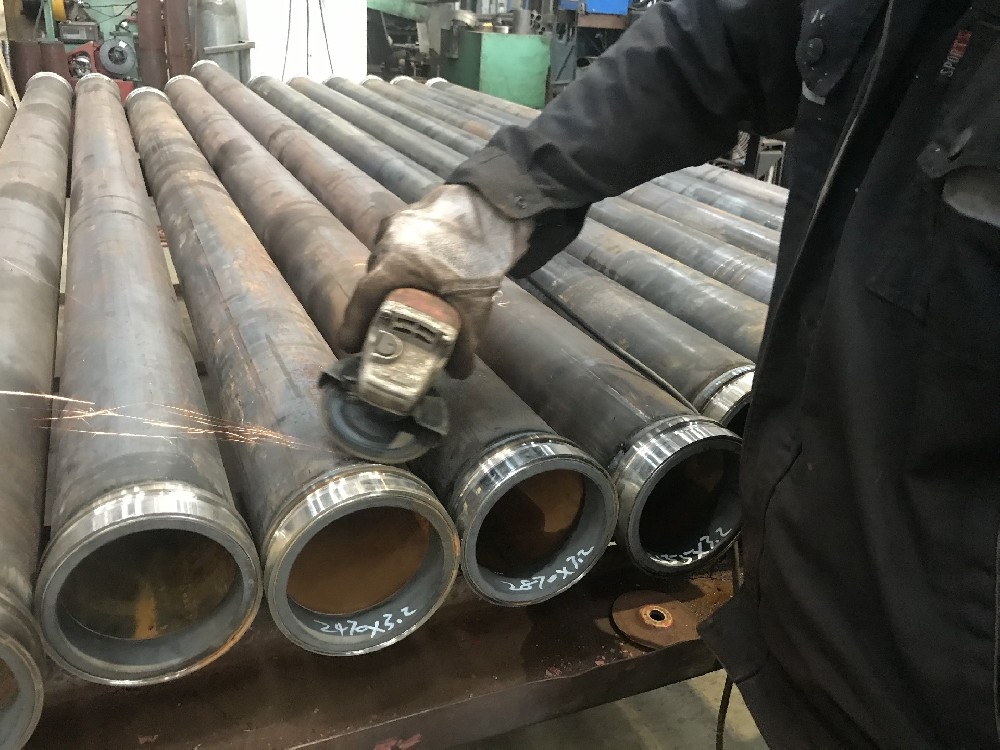
Relevant inspection may include dimensional measurement, weld inspection, surface inspection, material verification, and final product checks.
Customization Capability
A manufacturer that can provide customized dimensions may be useful for projects with non-standard layouts or replacement requirements.
Packaging and Shipping
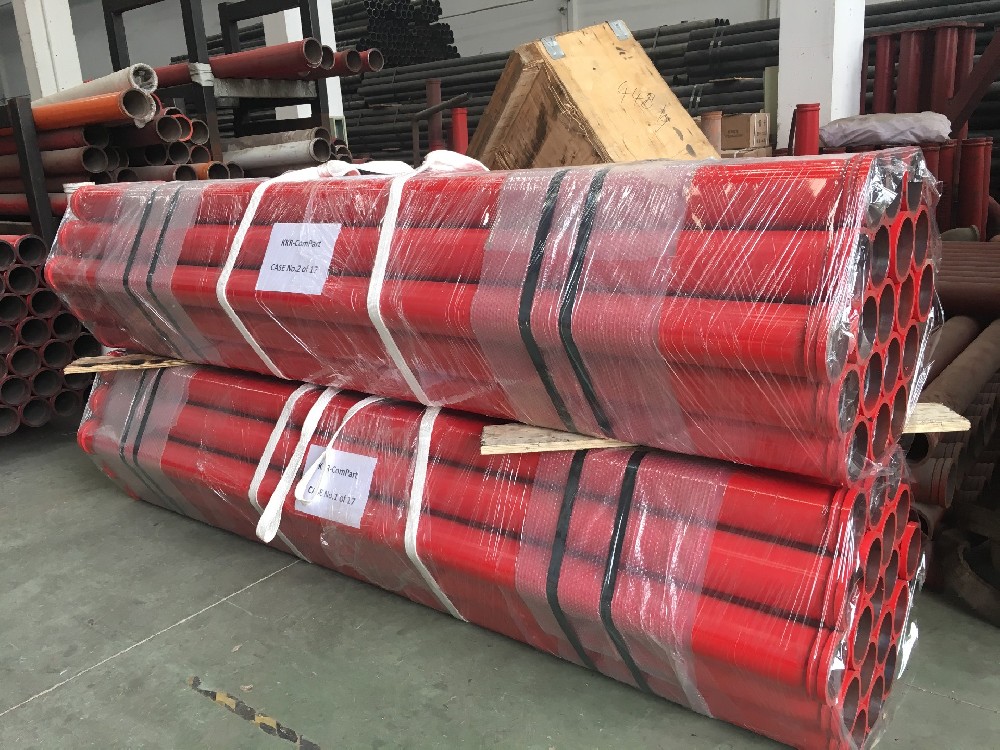
For international procurement, suitable packaging can help protect pipes and connection surfaces during transportation and handling.
Standard vs. Customized Concrete Delivery Pipes
Both standard and customized products can have their place in public venue construction.
Standard Delivery Pipes
Standard pipes can be appropriate when the project uses common dimensions and connection specifications.
They may simplify:
Procurement
Inventory management
Replacement
Equipment compatibility
Customized Delivery Pipes
Customized pipes may be suitable when:
The pipeline has special dimensional requirements
Existing equipment requires a specific connection
Space limitations affect pipe length
Replacement sections need to match an existing line
The best choice depends on the actual project requirements.
Why Proper Pipe Documentation Matters
Large public construction projects can use many delivery pipe sections over an extended period.
Maintaining accurate product information can help procurement and maintenance teams identify replacement sections later.
Useful records may include:
Pipe dimensions
Material
Wall thickness
Connection type
Purchase date
Inspection records
Usage history
Replacement history
Good documentation can make future procurement more efficient and help maintain consistency across the delivery system.
Conclusion
Concrete delivery pipes for public venue projects are an important part of the concrete pumping system used in stadiums, convention centers, theaters, arenas, exhibition facilities, transportation terminals, and other large public buildings.
Successful selection depends on several factors, including pipe diameter, wall thickness, material, length, connection design, elbow configuration, pumping distance, concrete mix, and expected operating conditions.
For contractors, construction equipment distributors, concrete pumping companies, and project procurement teams, the most practical approach is to evaluate the delivery pipe as part of the complete pumping system.
With appropriate specification, pipeline planning, routine inspection, proper cleaning, and timely replacement of worn sections, concrete delivery systems can be managed more effectively throughout the construction process.
Frequently Asked Questions
What are concrete delivery pipes used for in public venue construction?
Concrete delivery pipes transport fresh concrete from a concrete pump to the required placement area. They can be used for foundations, slabs, columns, beams, seating structures, retaining walls, and other reinforced-concrete components.
What should I consider when choosing a concrete delivery pipe?
Important considerations include pipe diameter, wall thickness, material, length, connection type, concrete mix, pumping distance, operating pressure, and expected wear conditions.
Are elbows important in public venue concrete pumping systems?
Yes. Elbows allow the pipeline to change direction around structural components and site obstacles. Because concrete flow changes direction inside an elbow, its wear condition may differ from that of straight pipes.
Can concrete delivery pipes be customized?
Depending on the manufacturer's production capability, customization may be available for dimensions such as length, wall thickness, diameter, and connection configuration.
How often should concrete delivery pipes be inspected?
Inspection frequency depends on usage conditions, pumping frequency, concrete characteristics, and project requirements. Frequently used sections and elbows may require closer monitoring.
How can pipe blockage be reduced?
Suitable concrete mix design, proper pipeline preparation, consistent pumping procedures, appropriate cleaning, and avoiding extended interruptions can help reduce blockage-related problems.
Can I use replacement pipes with an existing concrete pump system?
Replacement pipes can be used when their dimensions, connection configuration, pressure requirements, and other specifications are compatible with the existing system. Technical information should be confirmed before purchase.
What information should I provide to a supplier?
Useful information includes the concrete pump model or outlet specification, pipe diameter, wall thickness, pipe length, connection type, pumping distance, concrete application, required quantity, and drawings or samples when available.